
It is the moment every homeowner dreads. You walk past a vent or switch on your heating system for the first time in months, and suddenly, you are hit with it. That distinct, unsettling furnace smell. Is something burning? Is it just dust? Do you need to evacuate the house immediately?
Panic is a natural reaction. Your mind goes straight to the worst case scenario of a house fire or a dangerous gas leak. We get calls every single week during the colder months from worried families across the Greater Toronto Area and beyond who are staring at their thermostats in fear. The good news is that not every bad odor signals a catastrophe. The bad news is that some of them absolutely do, and ignoring them can lead to expensive repairs or serious safety risks.
We want to help you distinguish between a minor annoyance and a major emergency. This guide dives deep into what your nose is telling you about the health of your HVAC system and when it is time to call in the professionals for repairing furnace components that have failed.
Why Does My Furnace Smell Like Burning? Is It Safe or a Fire Hazard?
The “First Run” Phenomenon: Why It Smells Like Burning Dust
Let’s start with the most common scenario for this furnace smell. You turn on the heat for the first cold night of October or November. Within ten minutes, the house smells like a toaster that hasn’t been cleaned in years. This is almost always burning dust.
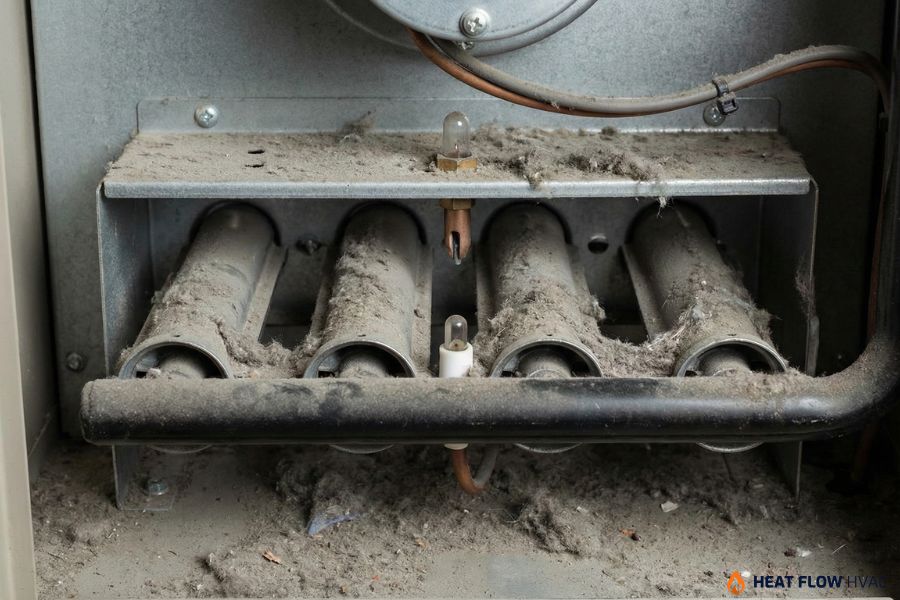
Think about what your furnace has been doing for the last six months. It has been sitting idle while your air conditioner did the work, or it has been off entirely. During that downtime, dust, lint, pet dander, and other airborne particles settle on the heat exchanger and the burners. When the burners ignite for the first time, that layer of debris gets incinerated instantly.
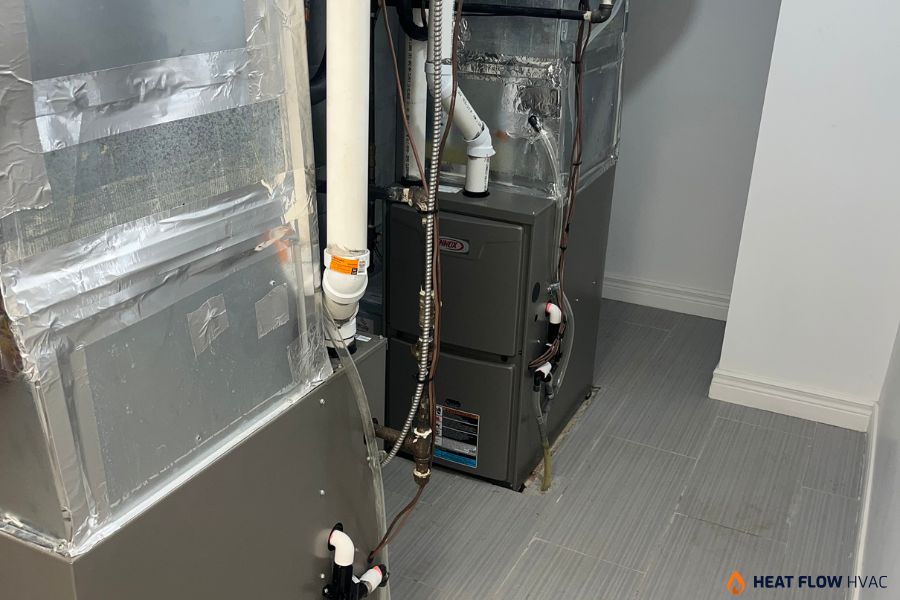
This smell usually is not thick or acrid. It is dry and warm, very similar to scorching fabric. In this specific case, you do not need to panic. We recommend opening a window or two to let the air circulate. The odor should dissipate completely within 30 to 60 minutes. If the smell hangs around for more than a few hours, or if there is visible smoke, that is when you know it is not just dust.
Decoding the Danger: A Guide to Hazardous Furnace Smells
Once you rule out simple dust, the situation gets more serious. Different materials give off very specific scents when they overheat or melt. Your nose can actually act as a diagnostic tool before we even arrive at your door.
| Smell Profile | Likely Culprit | Urgency Level | Recommended Action |
|---|---|---|---|
| Toasted Bread / Dust | Dust burning off the heat exchanger | Low (Normal) | Wait 60 minutes. Open windows for ventilation. |
| Sharp Plastic / Chemical | Melting wire insulation or failing capacitor | Critical | Turn off the furnace immediately. Call for service. |
| Burning Rubber | Seizing motor bearing or foreign object | High | Shut down the system. Check filter. Call a pro. |
| Rotten Eggs / Sulfur | Natural Gas Leak | Emergency | Evacuate the home. Call 911 or Enbridge Gas immediately. |
| Musty / Dirty Socks | Mold or bacteria on the coil | Medium | Schedule a cleaning and filter change. |
The Scent of Burning Plastic or Wax in the Furnace
If the air coming from your vents smells like burning plastic, electrical insulation, or hot wax, you have a mechanical or electrical failure on your hands. This is one of the most dangerous smells because it usually indicates that a safety component has failed to shut the system down before damage occurred.
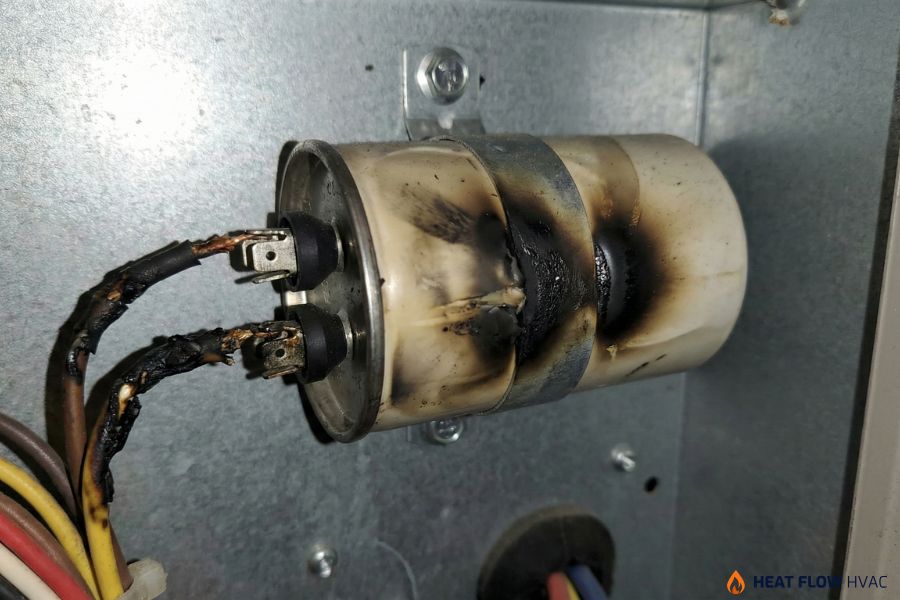
Inside your furnace cabinet, there are dozens of wires, circuit boards, and motors. If the blower motor overheats, the protective shellac coating on the copper windings can begin to melt. This produces a sharp, chemical odor. Similarly, a failing run capacitor often swells and emits a plastic-like smell right before it dies completely.
Do not try to “wait this one out.” Electrical shorts can lead to small fires inside the cabinet. If you smell plastic, turn the thermostat to OFF and call us to inspect the unit. We often find that catching a melting capacitor early saves the homeowner from having to replace the entire blower motor later.
The Furnace Smell of Burning Rubber
Older homeowners often associate a burning rubber smell in furnace with a broken fan belt. While that is true for furnaces built 20 or 30 years ago, most modern high-efficiency furnaces in Ontario use direct-drive motors. They do not have belts. So, what is making that smell?
In modern systems, a rubbery smell often means a foreign object has found its way into the ductwork. We have pulled countless items out of furnaces over the years. Rubber bands, soft plastic toys, and jar openers can fall down a floor vent and eventually get sucked toward the heat exchanger. When the furnace fires up, the object cooks.
Another possibility is the blower motor seizing up. If the bearings are dry and grinding, the friction creates immense heat, which can smell surprisingly like burning rubber or hot metal. This is a sign that repairing furnace motor components is necessary before the motor locks up entirely.
The “Rotten Egg” Emergency
We cannot stress this enough. Natural gas is odorless, but suppliers add a chemical called mercaptan to it so you can detect leaks. That chemical smells distinctly like sulfur or rotten eggs.
If you smell this, you are not dealing with a broken part. You are dealing with a gas leak. Do not touch any light switches. Do not use your phone inside the house. Do not try to find the leak yourself. Leave the premises immediately and call emergency services or your gas utility provider. Once the immediate danger is cleared, we can help inspect the piping and the unit to ensure it is safe to reconnect.
Why Is My Furnace Blowing Cold Air While Smelling?
Sometimes homeowners report a burning smell accompanied by the furnace blowing cold air. This is a very specific symptom. It usually means the furnace has overheated and the “high limit switch” has tripped. The limit switch is a safety device that kills the gas burners if the internal temperature gets too high, but it keeps the fan running to cool the unit down.
The burning smell comes from whatever caused the overheat in the first place, likely a clogged filter or a blocked exhaust vent. The cold air is simply the fan doing its job to prevent a fire. If this happens to you, check your filter immediately. A completely blocked filter restricts airflow, causing the heat exchanger to reach dangerous temperatures. If the filter is clean and this is still happening, you likely have a more complex airflow issue.
For more details on airflow issues, you can read our guide on why your furnace might be blowing cold air.
Hidden Causes of Bad Furnace Smells in Ontario Homes
Living in our region brings specific challenges that can contribute to HVAC odors. It is not always a mechanical failure. Sometimes, it is environmental.
The “Dirty Sock” Syndrome
Have you ever turned on the heat and been hit with the smell of a locker room or old cheese? In the industry, we call this “Dirty Sock Syndrome.” It happens when bacteria and mold grow on your evaporator coil during the humid summer months. When you switch to heating, those organic deposits get warmed up and blown through your house.
This is extremely common in homes that didn’t have their annual maintenance done in the spring. The bacteria build-up is not necessarily a fire hazard, but it destroys your indoor air quality and can irritate family members with allergies. A thorough cleaning of the coil and a UV light installation usually solves this problem for good.
Critters in the Cabinet
As the temperature drops outside, field mice and chipmunks look for warm places to nest. Unfortunately, the insulation around your furnace heat exchanger is a prime piece of real estate for them. If a rodent builds a nest inside your furnace venting or blower compartment, you will smell a pungent, urine-like odor or a smell of burning straw when the heat comes on.
This is a serious health hazard. Breathing in air circulated over rodent waste is dangerous. If you suspect pests, you need to turn the system off and have it professionally cleaned and sanitized. We also recommend checking the intake pipes outside your home to ensure the protective screens are still in place.
Troubleshooting Your Furnace System Before You Call
Before you pick up the phone, there are a few safe checks you can perform. These steps can sometimes resolve the issue or at least help us diagnose the problem faster when we arrive.
Check the Air Filter
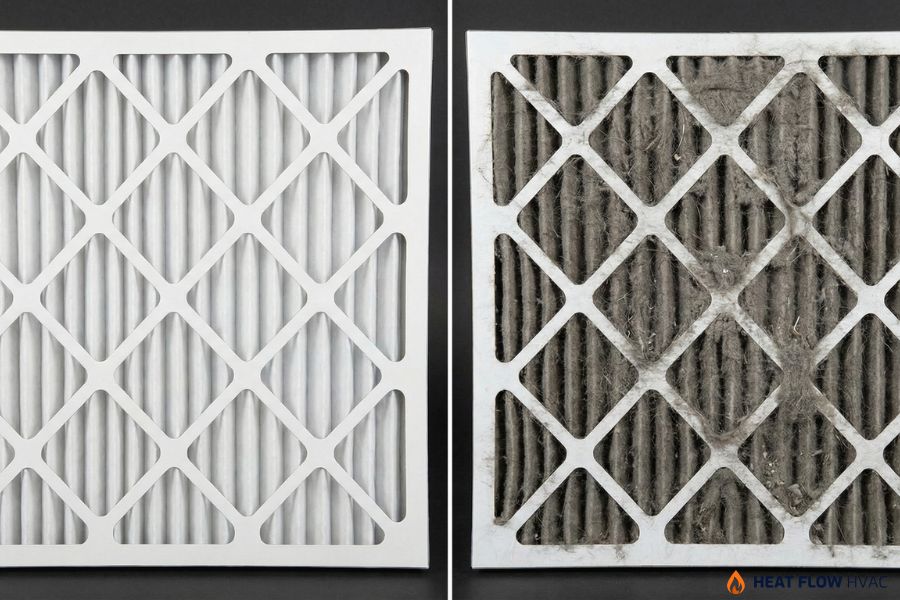
We mention this constantly because it is the number one cause of furnace failures. Pull out your furnace filter. If it is grey, black, or matted with dust, replace it immediately. A clogged filter causes the fan motor to work harder, leading to overheating smells. If you aren’t sure if your maintenance is up to date, check our article on when to service your furnace.
Inspect Your Floor Vents
Walk around your home and look into your floor registers. If you have small children or pets, use a flashlight to see if anything has fallen inside. You might spot the corner of a candy wrapper or a small plastic toy resting in the duct boot. If you can safely reach it, remove it. If it has fallen deeper into the ductwork, we have tools to retrieve it without damaging the pipes.
Look for Moisture
Check the area around the base of your furnace. If you see water pooling, you might have a condensate leak (common in high-efficiency units) or a humidifier issue. While water itself doesn’t smell like burning, water dripping onto electrical components certainly will cause a short circuit and a distinct ozone smell.
When Professional Furnace Repair is Non-Negotiable
We are all for homeowners taking an active role in maintaining their homes, but there is a hard line when it comes to combustion appliances. You should never open the sealed burner compartment of your furnace or attempt to replace electrical components yourself. The voltage inside a furnace is high enough to cause serious injury, and an improperly installed gas valve can be catastrophic.
If the smell persists after you have changed the filter and waited an hour, you need a professional. At Heat Flow HVAC, our technicians use specialized tools like manometers to check gas pressure and multimeters to test electrical loads. We can pinpoint if a motor is drawing too many amps (causing that burning smell) long before it actually catches fire.
According to safety authorities like the Technical Standards and Safety Authority (TSSA), regular inspections are the only way to ensure your fuel-burning appliances are operating safely. Ignoring a burning smell is essentially ignoring a warning light on your car dashboard.
Preventing Future Odors In Your HVAC System
The best way to avoid the panic of a strange furnace smell is through preventative maintenance. We recommend a full system tune-up every autumn before the heavy frost sets in. During this visit, we clean the burners, check the heat exchanger for cracks (which can leak carbon monoxide), and tighten all electrical connections.
Tight electrical connections are key. Wires loosen over time due to the subtle vibrations of the furnace running. A loose wire creates resistance, resistance creates heat, and heat creates that scary burning plastic smell. A simple tightening of a screw during a maintenance visit can prevent a midnight breakdown in January.
If you are currently smelling something burning and you are unsure of the source, err on the side of caution. Turn the system off. It is better to be chilly for a few hours than to risk the safety of your home. Our team is ready to help you identify the issue and get your home warm and safe again. For routine care, don’t forget to call us for furnace repair services to see what a full inspection covers.
Your furnace is the heart of your home during our long winters. Listen to it, and trust your nose. If something smells wrong, it usually is.