
In the dead of an Ontario winter, your furnace is the most important appliance in your home. We rely on it to run silently in the background, keeping our families warm while the temperatures outside drop well below freezing. Because we are so used to the quiet, consistent hum of a healthy heating system, a sudden noisy furnace can be alarming.
Strange sounds from your HVAC system are rarely just an annoyance. They are almost always a mechanical cry for help. A healthy furnace should operate with a low, steady sound of air moving. Any sudden banging, high-pitched whistling, or metal-on-metal rattling indicates a specific failure that needs attention. Ignoring these auditory warning signs does not make the problem go away. In fact, it usually leads to a more expensive repair bill or, in severe cases, a complete system breakdown right when you need heat the most.
At Heat Flow HVAC, we have diagnosed thousands of furnaces across the Greater Toronto Area. We have compiled this comprehensive guide to help you translate exactly what your furnace is trying to tell you based on the specific noise it is making.
Is a Noisy Furnace Dangerous?
Before we dive into the specific sounds, the most common question homeowners ask us is: “Is this dangerous?”
The answer depends entirely on the type of noise. Some sounds, like a slight rattle from a loose screw, are harmless annoyances. Others, particularly loud booms or screeching metal, can indicate immediate safety hazards like gas buildup or fire risks. If you ever smell gas or suspect a carbon monoxide leak, you should leave the home immediately and contact a professional. For more on gas safety, you can refer to the Technical Standards and Safety Authority (TSSA) guidelines for Ontario homeowners.
Strange mechanical sounds are rarely just an annoyance; they are usually a cry for help. A healthy system should hum quietly, so if you are dealing with a noisy furnace that is banging or whistling, it indicates a specific failure that needs attention. Ignoring these signs often leads to a more expensive furnace repair service bill later in the season.
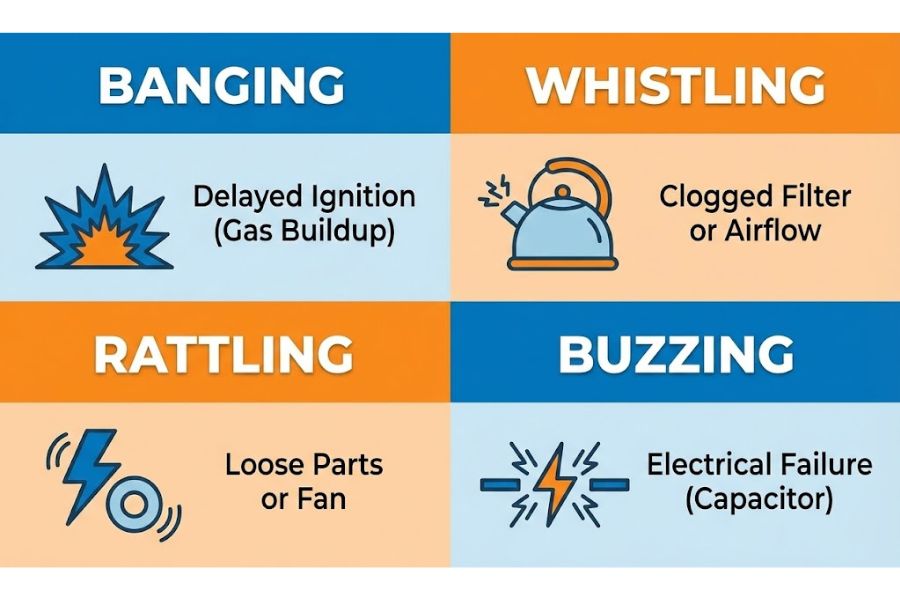
1. Loud Banging: The Most Dangerous Noisy Furnace Sound
One of the most frightening sounds a homeowner can hear is a loud bang or boom sound coming from the furnace cabinet. This noise often happens right when the furnace kicks on to start a new heating cycle. It can sound like a heavy object being dropped on the floor or even a small shotgun blast.
What Causes Delayed Ignition?
This noise is almost always caused by delayed ignition. In a properly functioning furnace, the gas valve opens, and the ignitor lights the gas immediately. The result is a smooth, quiet whoosh of flame.
However, if the burners are dirty or the pilot light is weak, the gas can flow into the combustion chamber for several seconds without igniting. The gas builds up inside the chamber until it finally reaches the spark or flame. When it finally does catch, that accumulated cloud of gas ignites all at once. This creates a mini-explosion inside your furnace, resulting in that terrifying loud bang.
The Risk: Why You Must Fix This Immediately
You cannot ignore a banging furnace. Those repeated mini-explosions put massive physical stress on your heat exchanger. The heat exchanger is the metal component that separates the poisonous combustion gases from the breathable air in your home.
If the force of the delayed ignition cracks the heat exchanger, your furnace could start leaking carbon monoxide into your living spaces. This is a critical safety issue. If your furnace is banging, turn it off and call a licensed technician to clean the burners and check the gas pressure immediately.
2. Whistling or Screeching: Is Your Noisy Furnace Gasping for Air?
If your heating system sounds like a tea kettle boiling over or a jet engine taking off, you are dealing with a whistling furnace. This category of sound usually points to one of two problems: airflow restrictions or belt issues.
The Most Common Culprit: A Dirty Air Filter
A high-pitched whistle is the sound of air being forced through a tiny opening at high pressure. In 90% of cases, this means your furnace is “suffocating” because it cannot pull enough air through the return ducts.
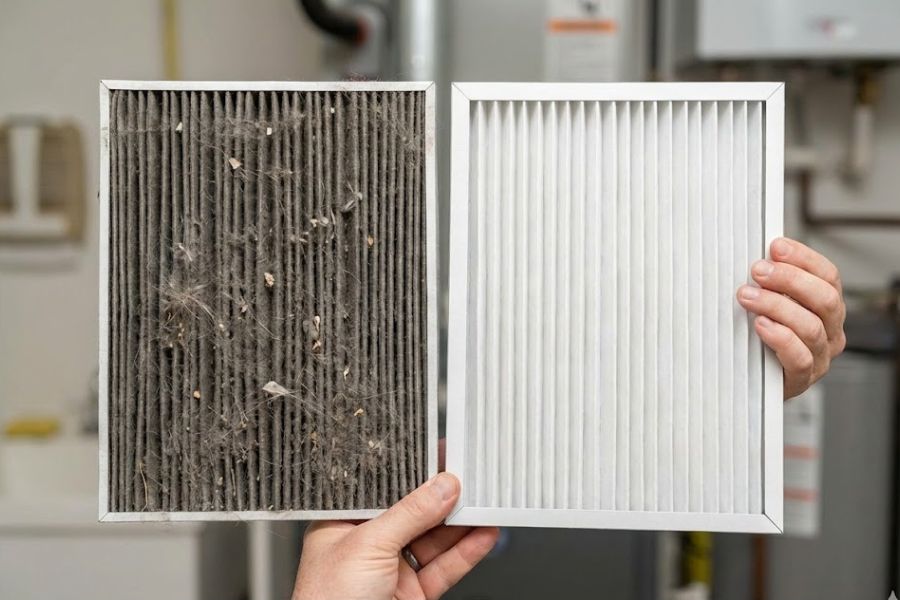
The first thing you should check is your air filter. If the filter is clogged with dust, pet hair, and debris, the blower motor has to work overtime to suck air through that blockage. This creates a vacuum whistle. Not only is this noisy, but it also drives up your hydro bill and can overheat the furnace.
Pro Tip: Winter air is already dry, which creates more static electricity and dust accumulation. This can clog filters faster than in the summer. If you are struggling with air quality, you might also want to read our guide on how humidifiers help dry air to understand how humidity control can actually help your overall system health.
Screeching: The Sound of Metal Friction
If the sound is less of a whistle and more of a metal-on-metal screeching or squealing, the issue is likely mechanical rather than airflow. This typically indicates:
- Loose Fan Belt: On older furnaces, a loose belt can slip and squeal, similar to a fan belt in a car.
- Dry Motor Bearings: The blower motor has bearings that allow it to spin freely. If these bearings lose their lubrication, they will scream when the motor runs. This is a sign that the motor is seizing up and may burn out soon.
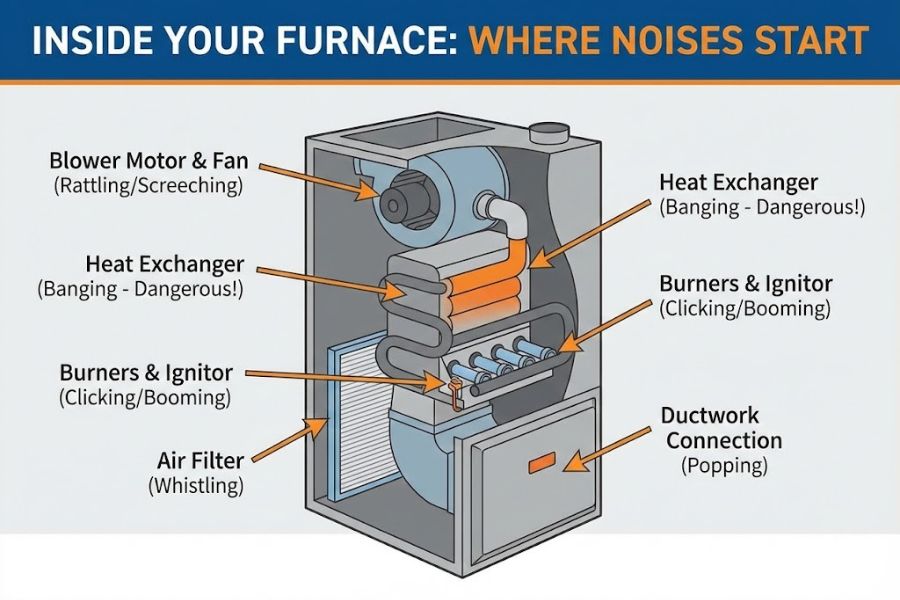
3. Rattling: Why Your Noisy Furnace Sounds Like It’s Vibrating
Rattling noises can be tricky to diagnose because they can range from a loose screw to a broken major component. A rattling furnace generally sounds like someone shaking a metal can of bolts, or an unbalanced washing machine.
External vs. Internal Rattling
First, try to locate where the sound is coming from. If the rattling is coming from the outside of the unit, it might simply be a loose access panel. The vibrations of the furnace running can work screws loose over time. This is an easy DIY fix – simply grab a screwdriver and tighten the panels.
However, if the clanking sound is coming from inside the cabinet, you might have a more serious problem. A common internal cause is a damaged blower wheel. The blower wheel is the “hamster wheel” fan that moves air through your ducts. If it becomes unbalanced or if a blade breaks off, the wheel will wobble violently as it spins. This causes the motor assembly to shake and bang against the housing.
Ignoring a loud metallic scraping sound almost always leads to a catastrophic blower motor failure. Recently, during a routine heating service call in Toronto, we discovered a loose blower wheel in an older century home that was just days away from tearing apart the entire furnace housing. Catching that rattle early saved the homeowner from needing a full system replacement.
Ductwork Expansion Noise
Sometimes, the noise is not the furnace itself but the ducts. When the hot air from the furnace rushes into cold metal ducts, the metal expands rapidly. This can cause a loud “pop” or “oil-canning” noise. While annoying, this is generally harmless. However, if the ducts are rattling constantly, they may need to be secured with better fasteners or rubber pads to dampen the vibration.
4. Constant Clicking: “I Can’t Light the Fire”
A furnace that sounds like it is trying to start but fails is a very common winter complaint. You will hear the blower turn on, followed by a rhythmic click-click-click-click… and then silence. The furnace may try this cycle three times before locking out completely.
The Flame Sensor Issue
That clicking sound is the electronic ignitor trying to light the gas. If you hear the click, see a momentary glow or flame, and then the system shuts off immediately, the culprit is often a dirty flame sensor.
The flame sensor is a small safety rod that sits in the fire. Its only job is to tell the computer “Yes, there is a fire, keep the gas on.” Over time, carbon builds up on the rod, blinding it. The sensor cannot see the flame, so it cuts the gas for safety. Fortunately, this is a maintenance issue, not a broken part. We have a detailed walkthrough on this specific problem in our post: how to clean the flame sensor on your furnace.
5. Buzzing or Electrical Humming: “I’m Trying to Start”
A low, angry buzzing or humming noise usually points to an electrical failure. If the furnace is buzzing but the fan is not spinning, your system is “locked rotor.”
The Capacitor Failure
The most common cause of a buzzing furnace is a failed run capacitor. The capacitor acts like a battery that gives the motor the extra torque it needs to start spinning. If the capacitor is dead, the motor receives power but cannot physically turn. It sits there vibrating and humming until it overheats.
Warning: If you hear this buzzing sound, turn the thermostat to “OFF” immediately. Leaving a motor in a locked-rotor state for too long will burn out the motor windings, turning a $50 capacitor repair into a $600+ motor replacement.
Noisy Furnace Troubleshooting Guide: When to Call a Professional HVAC Company
Not every noise requires an emergency service call. Use this quick reference table to decide if you can troubleshoot the issue yourself or if you need to call Heat Flow HVAC.
| Sound | Likely Cause | Action Plan |
|---|---|---|
| Loud Bang / Boom | Delayed Ignition (Gas Buildup) | Emergency. Turn off furnace. Call a Pro. |
| High-Pitched Whistle | Dirty Air Filter | DIY. Change your filter immediately. |
| Metal Screeching | Dry Bearings / Slipped Belt | Call a Pro. Motor may seize soon. |
| Rattling / Clanking | Loose Panel or Broken Fan | Check outer screws. If internal, call a Pro. |
| Clicking (No Heat) | Dirty Flame Sensor | Clean sensor (DIY) or call for maintenance. |
| Electrical Buzzing | Bad Capacitor | Call a Pro. Do not touch electrical parts. |
The Cost of Ignoring Furnace Noises
We understand the hesitation to call a technician. No one wants an unexpected bill. However, a noisy furnace is telling you that a part is struggling. In the HVAC world, small parts protect expensive parts.
A $20 air filter protects a $600 blower motor. A $50 capacitor protects a $1,000 compressor. A simple cleaning protects a $2,500 heat exchanger. According to Natural Resources Canada, regular maintenance and prompt repairs are the single most effective way to extend the lifespan of your heating equipment and maintain energy efficiency.
By catching that rattle or whine early, you are usually paying for a service call and a minor adjustment. If you wait until the noise stops (because the furnace has died), you are likely paying for a major component replacement.
Stop the Furnace Noises and Restore the Heat
If your furnace is bumping, banging, or keeping you up at night with strange sounds, don’t wait for the heat to fail completely. Winter in Ontario is too cold to take risks with your home comfort.
Heat Flow HVAC provides fast, reliable diagnostics for noisy furnaces in Toronto and the surrounding areas. We can pinpoint the sound, fix the underlying cause, and get your home back to a safe, quiet warmth.
Need help silencing your furnace? Contact us today to schedule your inspection.