
Dealing with window condensation during winter is a morning ritual nobody enjoys. You wake up on a freezing cold Tuesday morning in the GTA, pull back your curtains to check the weather, and… splash. Your hand is wet.
But here is the truth that most window companies won’t tell you: Your windows are probably fine. The problem is likely your air.
At Heat Flow HVAC, we see this issue constantly. While it looks like a glass problem, it is actually a humidity management problem. Understanding why window condensation issues happen is the first step to saving your window frames from rot and your home from mold.
In this guide, we are going to break down exactly why your house is sweating, the ideal humidity levels for Ontario winters, and how your furnace, humidifier, and HRV play a massive role in keeping your glass dry.
What Exactly Causes Window Condensation Winter Buildup?
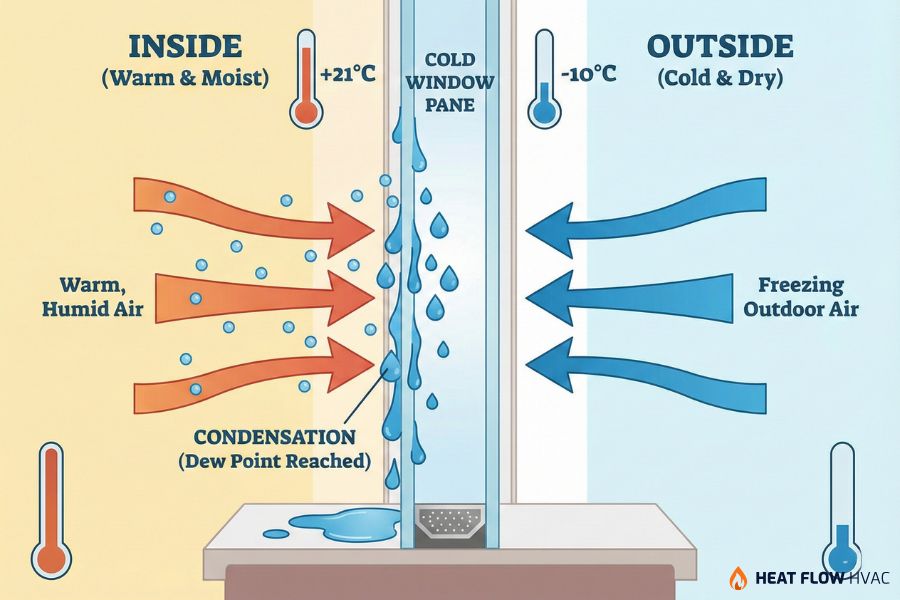
To fix the problem, we have to look at the science. Don’t worry, we will keep it simple. It all comes down to a concept called the “Dew Point.”
Watch Our Humidifier & Furnace Installation
The Battle Between Warm Air and Cold Glass
Imagine a cold can of soda sitting outside on a hot summer day. Within minutes, the outside of the can is dripping wet. The can didn’t leak; the moisture came from the air.
Your windows in winter are the exact same phenomenon, just in reverse.
- The Sponge Effect: The warm air inside your home acts like a sponge. It holds a lot of invisible water vapor (humidity).
- The Cold Shock: When that warm, moist air touches your window pane, which is freezing cold because of the outdoor temperature, it cools down instantly.
- The Release: Cold air cannot hold as much moisture as warm air. The “sponge” gets squeezed, and it dumps that excess water onto the nearest cold surface: your glass.
The colder it is outside, the colder your glass becomes, and the easier it is for window condensation droplets to form.
Is My Furnace Humidifier Causing Winter Issues with Window Condensation Issues?
This is the most common culprit we see during our service calls in Vaughan and Richmond Hill. You want your home to be comfortable, so you crank up the humidifier to avoid dry skin and static electricity. But there is a balance.
If your humidifier installation and settings are not adjusted for the dropping outdoor temperature, you are essentially pumping gallons of water into a house that cannot handle it.
The “Set It and Forget It” Mistake
Many homeowners set their humidistat (the little dial usually found above the furnace) to 40% or 45% in November and leave it there until March. This is a recipe for wet windows.
As the temperature outside drops, the temperature of your glass drops. If you keep the humidity high while the glass gets cold, condensation is guaranteed.
How to Check Your Humidifier
- Listen for the Click: Turn the dial. Do you hear a click? That is the solenoid valve opening to let water in. If it clicks when the humidity is already high, turn it down.
- Check the Pad: Open the unit. Is the water panel (filter) moldy or calcified? A dirty pad can sometimes restrict airflow or harbor bacteria.
- Look for Leaks: Ensure the drain line is clear. A backed-up humidifier can add uncontrolled moisture to the basement air.
The Ideal Humidity Chart: Avoiding Window Condensation Problems
So, what is the magic number? How do you keep your skin from cracking without your windows crying?
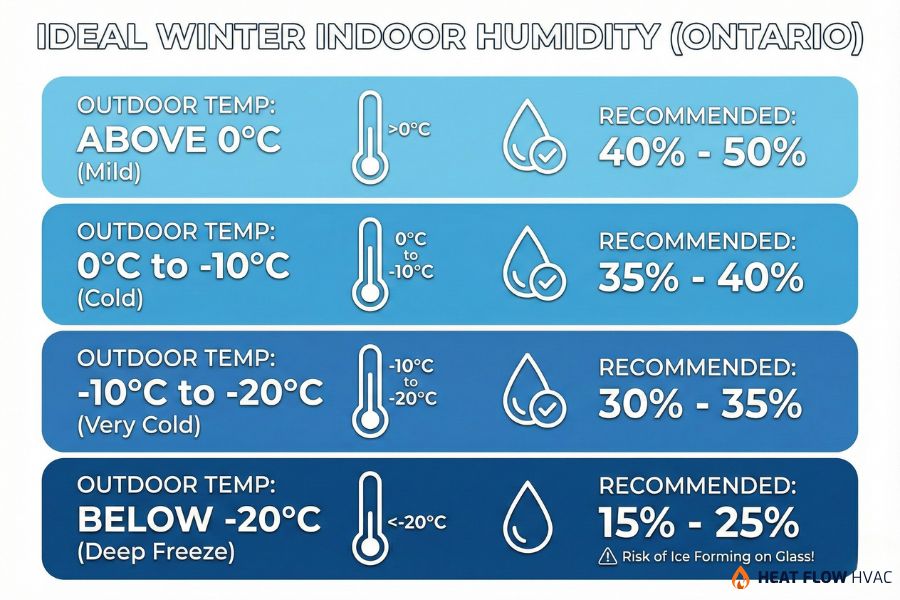
You need to adjust your indoor humidity based on the outdoor temperature. Print this chart out and tape it near your thermostat or furnace.
| Outdoor Temperature | Recommended Indoor Humidity | Risk of Condensation |
|---|---|---|
| Above 0°C | 40% – 50% | Low |
| 0°C to -10°C | 35% – 40% | Moderate |
| -10°C to -20°C | 30% – 35% | High |
| Below -20°C (Deep Freeze) | 15% – 25% | Very High (Ice likely) |
If the weatherman calls for a “Polar Vortex,” go downstairs and turn your humidifier off or to the lowest setting for a few days. Your windows will thank you.
Can a Broken HRV Unit Lead to Window Condensation Buildup?
If you live in a newer home (built after 2010) in the GTA, your house was built to be airtight. It does not “breathe” through cracks like old Victorian homes did. This is great for energy efficiency, but terrible for trapping moisture.
That is why you have an HRV (Heat Recovery Ventilator). But many homeowners don’t know how to use it.
What Does the HRV Actually Do?
Think of the HRV as the lungs of your house. It sucks out the stale, humid air from your bathrooms and kitchen and swaps it with fresh, dry winter air from outside. It then recovers the heat so you don’t freeze.
If your HRV is turned off, broken, or has clogged filters, that moist air has nowhere to go. It stays inside and attacks your windows.
Signs Your HRV Needs Attention
- Stuffy Air: The house smells like cooking dinner hours after you have finished.
- Excessive Moisture: You are seeing window condensation and winter buildup in every room, not just the bathroom.
- No Sound: You don’t hear the unit ramping up when you turn on the bathroom timer.
If you suspect your unit isn’t exchanging air properly, our team at Heat Flow HVAC can perform a full HRV installation or service check to get the air moving again.
Does My Furnace Airflow Affect Window Condensation Severity?
Believe it or not, the fan setting on your thermostat can change how much water collects on your glass.
The “Auto” vs. “On” Debate
Most people leave their fan set to “Auto.” This means the fan only blows when the furnace is actively heating. Once the house reaches a temperature, the air stops moving.
When the air stops moving, “dead zones” of air form near your windows. This stagnant air cools down rapidly and deposits its moisture.
- The Fix: Switch your thermostat fan setting to “On” during extremely cold days.
- The Benefit: This keeps the air circulating constantly. The moving air washes over the windows, warming the glass slightly and preventing condensation from settling.
However, for this to work, your furnace needs to be breathing freely. A clogged filter will reduce airflow, making the problem worse. If it has been a while, it might be time for a furnace repair or maintenance visit to ensure your blower motor is strong enough to keep air circulating.
3 Sneaky Sources of Moisture You Might Be Ignoring
You have turned down the humidifier. You have checked the HRV. Why is the window condensation issue still happening? You might be generating more water than you realize.
1. The “Curtain Trap”
Do you close heavy thermal curtains or blinds at night to keep the heat in? You are accidentally creating a freezer against your window. The curtain blocks warm room air from reaching the glass, causing the glass temperature to plummet. Meanwhile, moist air leaks behind the curtain and freezes.
Quick Fix: Keep blinds and curtains open a few inches at the bottom, or open them completely during the day to let the sun dry the glass.
2. The “Jungle” Effect
We all love houseplants, but they breathe too. Through a process called transpiration, plants release moisture vapor into the air. If you have a table full of plants right next to a cold window, you are creating a micro-climate of high humidity right where you don’t want it.
3. New Construction “Sweat”
If your home was built or renovated in the last 12-18 months, the building materials are still drying out. Concrete, wood, and drywall release massive amounts of water vapor as they cure. This can take over a year. In this case, you may need to run a dehumidifier even in winter.
When Should I Worry About Window Condensation? Surface vs. Between-the-Panes
Not all condensation is created equal. There is a big difference between water on the glass and water in the glass.
Exterior Condensation (Outside the House)
This is actually a good sign! It means your windows are insulating so well that the outside glass is staying cold while your house stays warm. This usually burns off as soon as the sun comes up.
Interior Condensation (Inside the Room)
This is the humidity issue we have been discussing. It is annoying, but manageable with the HVAC tips above.
Condensation Between the Panes
If you see fog, droplets, or white hazing inside the double-pane unit and you cannot wipe it off from the inside or outside, this is a mechanical failure.
This means the seal on your window unit has failed. The insulating gas (Argon) has escaped, and moisture has leaked in. Unfortunately, no amount of dehumidifying will fix this. You will need to replace the glass unit (the sealed glazing) or the entire window.
How to Stop Window Condensation Winter Issues Today
Ready to dry out your home? Here is your action plan from the Heat Flow HVAC team:
- Lower the Humidistat: If it is below -10°C outside, set your humidity to 30% or lower.
- Run Exhaust Fans: Keep kitchen and bathroom fans running for at least 20 minutes after you finish cooking or showering.
- Check Airflow: Ensure your vents are open and not blocked by furniture.
- Use Ceiling Fans: Set them to rotate clockwise (low speed) to push warm air down from the ceiling to the windows.
- Inspect the HRV: Make sure the filters are clean and the unit is actually running.
According to Natural Resources Canada, proper ventilation is critical not just for windows, but for your health. Stale, moist air is a breeding ground for allergens and mold.
Need Help Balancing Your Home’s Humidity?
Dealing with window condensation headaches can be tricky. Sometimes the issue is a simple setting; other times, it is an old humidifier that is leaking or a furnace that isn’t moving enough air.
If you have tried these tips and water is still running down your walls, it is time to call in the professionals. At Heat Flow HVAC, we can assess your entire home’s mechanical system to find the root cause of the moisture.
Whether you need a new flow-through humidifier, an HRV tune-up, or a furnace inspection, we are here to help homeowners across the GTA stay warm and dry.
Don’t let moisture damage your home. Contact Heat Flow HVAC today for a consultation.