
A furnace that starts, runs briefly, then shuts off is one of the most frustrating heating problems homeowners face, especially during cold Canadian winters. In many cases, the issue comes down to one small but critical component: the flame sensor. Learning how to clean a flame sensor on a furnace can restore proper operation, prevent emergency breakdowns, and help your heating system run safely and efficiently.
This in-depth guide explains what a flame sensor does, why it gets dirty, how to clean it properly, and when furnace flame sensor cleaning is no longer enough. Everything is written for homeowners but backed by real HVAC knowledge, so you know exactly what to do and when to call a professional.
What Is a Flame Sensor on a Furnace and Why Cleaning It Matters
The flame sensor is a safety device inside your gas furnace that confirms a flame is present after ignition. Once gas is released and ignited, the sensor sends a small electrical signal to the control board confirming that combustion is happening safely.
If the furnace control board does not receive this signal, it immediately shuts off the gas valve. This protects your home from dangerous gas buildup but also causes repeated furnace shutdowns when the sensor is dirty.
How a Dirty Flame Sensor Affects Furnace Performance
- Causes furnace short cycling after ignition
- Leads to cold air blowing from vents
- Triggers repeated ignition attempts
- Increases wear on furnace components
- Can result in no heat during extreme weather
Even a thin layer of oxidation or carbon buildup can prevent the flame sensor from detecting the burner flame properly.

Common Furnace Symptoms That Mean You Need to Clean the Flame Sensor
Signs of a Dirty Flame Sensor in a Gas Furnace
- Furnace ignites but shuts off after 5 to 10 seconds
- System attempts multiple restarts before locking out
- Thermostat calls for heat but furnace will not stay on
- No error codes or misleading ignition errors
Question Homeowners Ask: Can a Dirty Flame Sensor Stop My Furnace From Heating?
Yes. A dirty flame sensor can completely stop your furnace from producing heat even though other components are working correctly. This is one of the most common reasons homeowners call for furnace repair services during winter.
Why Flame Sensors Get Dirty in Furnaces Over Time
Flame sensors naturally accumulate residue due to the combustion process. This happens even in well-maintained furnaces.
Main Causes of Flame Sensor Buildup in Furnaces
- Carbon deposits from gas combustion
- Oxidation caused by repeated heating and cooling
- Dust pulled into the burner area
- Improper air to gas mixture
This buildup insulates the sensor, preventing it from detecting the flame signal accurately.
How to Clean Flame Sensor on a Furnace Safely at Home
Cleaning a flame sensor is one of the few furnace maintenance tasks homeowners can safely do if they follow proper precautions.
Tools Needed to Clean a Furnace Flame Sensor
- Phillips or flathead screwdriver
- Fine grit sandpaper between 320 and 600 grit
- Clean lint-free cloth or paper towel
- Flashlight
Important Safety Note Before Cleaning a Furnace Flame Sensor
Always turn off power and gas to your furnace before beginning. Allow the unit to cool completely before touching any internal components.
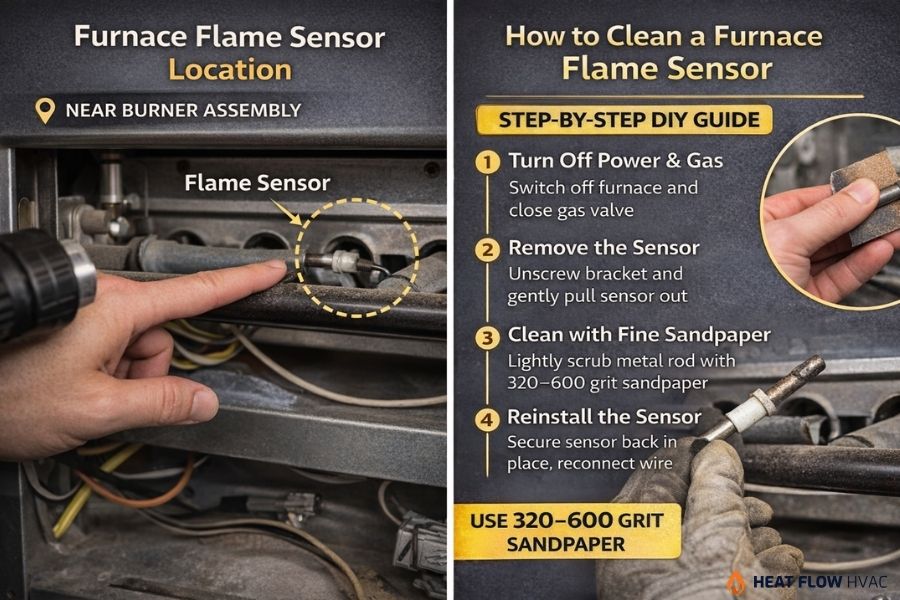
Step-by-Step Instructions to Clean a Flame Sensor on a Gas Furnace
- Turn off the thermostat and shut off furnace power at the breaker
- Close the gas valve for added safety
- Remove the furnace access panel
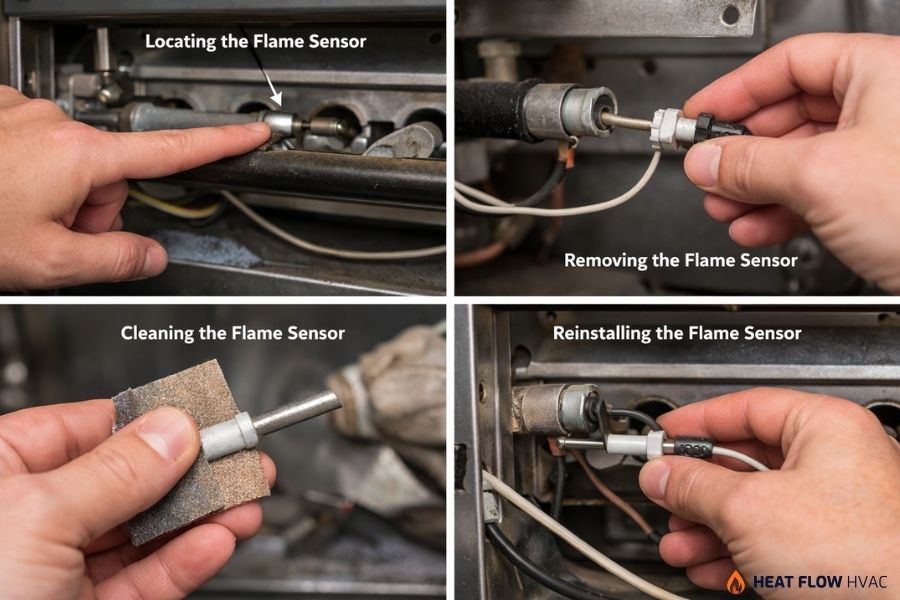
- Locate the flame sensor near the burner assembly
- Disconnect the wire gently from the sensor
- Remove the mounting screw and pull out the sensor carefully
- Lightly polish the metal rod using fine grit sandpaper
- Wipe the sensor clean using a dry cloth
- Reinstall the sensor in its original position
- Reconnect the wire, restore gas and power, and test the furnace
What to Avoid When Cleaning a Furnace Flame Sensor
- Do not use steel wool or harsh abrasives
- Do not use water or chemical cleaners
- Do not scrape the ceramic base
- Do not bend or force the sensor
How Often Should You Clean a Flame Sensor on a Furnace
Most HVAC professionals recommend cleaning the flame sensor once per year as part of routine furnace maintenance.
| Furnace Usage | Recommended Flame Sensor Cleaning |
|---|---|
| Average residential furnace | Once per year |
| High-use or older furnace | Every 6 to 12 months |
| Recurring ignition issues | As needed with professional inspection |
When Cleaning the Flame Sensor Does Not Fix Furnace Problems
Sometimes cleaning the flame sensor does not resolve the issue. In those cases, the problem may be more complex.
Other Furnace Issues Often Mistaken for Dirty Flame Sensors
- Failing flame sensor that needs replacement
- Dirty or misaligned burners
- Faulty gas valve
- Weak control board signal
- Improper furnace installation
If your furnace still shuts off after cleaning the sensor, professional diagnosis is recommended. This is especially important for newer systems or recently upgraded units installed through professional furnace installation services.
Is It Safe to Clean a Furnace Flame Sensor Yourself
Homeowner-Friendly Furnace Maintenance vs Professional Service
Cleaning a flame sensor is safe for most homeowners if done carefully. However, if you notice cracked wiring, damaged components, or repeated lockouts, stop immediately and call a licensed HVAC technician.
Preventing Flame Sensor Problems in Your Furnace
Best Practices to Keep Your Furnace Flame Sensor Clean
- Schedule annual furnace inspections
- Change furnace air filters regularly
- Keep burner compartments clean
- Address ignition issues early
Proper maintenance not only keeps your flame sensor clean but also extends the life of your entire furnace system.
Furnace Flame Sensor vs Thermocouple: Common Homeowner Confusion
Many homeowners confuse flame sensors with thermocouples. While both detect heat, modern furnaces use flame sensors rather than thermocouples.
| Component | Used In | Purpose |
|---|---|---|
| Flame Sensor | Modern gas furnaces | Confirms burner flame presence |
| Thermocouple | Older furnaces and gas appliances | Controls pilot light safety |
Cleaning a Flame Sensor on Your Furnace
A dirty flame sensor is one of the simplest furnace problems with the biggest impact. Cleaning it can restore heat, prevent emergency calls, and keep your furnace operating safely during winter.
If your furnace continues to shut down or you are unsure about performing maintenance yourself, Heat Flow HVAC offers expert furnace diagnostics and repair solutions tailored to your home and climate.
Addressing flame sensor issues early protects your comfort, your furnace, and your peace of mind.