
It always seems to occur at the most inconvenient time. You wake up to a house that feels more like an icebox than a home as the temperature outside drops and the wind picks up across the GTA. It’s stressful when your furnace breaks down just when you need it most. Murphy’s Law of homeownership states that on a mild Tuesday in October, your furnace never malfunctions. No, it waits for Toronto’s coldest night of the year, when you’re just trying to keep your toes warm and the wind chill reaches -20°C. You may not be the only one who has woken up in a freezing house following a significant drop in temperature.
At Heat Flow HVAC, we field hundreds of calls during those first deep freezes of the year. The good news? A furnace not working after a temperature drop doesn’t always mean you need a brand-new system. Often, the extreme cold exposes minor maintenance issues that were easy to ignore when the weather was mild. This guide will walk you through exactly why your heating system struggles in the cold, give you a robust checklist of DIY fixes, and help you decide when it is time to call in our professional team.
Why Does Furnace Temperature Drop When It Gets Cold?
It seems ironic. Why does your furnace stop working when the cold actually arrives, when it was designed to heat your house? The workload holds the key. Your furnace cruises along, running brief cycles to maintain your indoor temperature when the outside temperature is mild (between 0°C and 5°C).
However, your system must operate at full capacity when Southern Ontario experiences those severe freezes. To bridge the gap between your cozy living room and the chilly outside world, it runs for extended periods of time. This “stress test” tests the limits of each component. The additional strain of extreme cold is frequently the breaking point that results in a part failing if it is weak, dirty, or nearing the end of its life.
Start Here: Your 5-Minute DIY Inspection Checklist
Spend a few minutes playing detective before you panic or call us for an emergency furnace service. By guiding people through these simple inspections, we have prevented numerous homeowners from having to pay for a service call. There are times when the answer is in front of you.
1. Check Your Thermostat Settings
It may seem apparent, but this is the most frequent “non-issue” we come across. Make sure your thermostat is actually set to “HEAT” rather than “COOL” or “OFF.” Verify the temperature setting; in order for the furnace to start, it must be at least three to five degrees higher than the current room temperature. Additionally, replace the batteries if your thermostat is battery-operated. The screen may remain on, but your furnace won’t receive the signal if the battery is low.
2. Inspect the Emergency Power Switch
Most furnaces in the GTA have a dedicated power switch that looks exactly like a standard light switch. It is usually located on the ceiling in the furnace room or on the wall nearby. It is incredibly easy to bump this switch off when you are moving holiday storage boxes or grabbing the vacuum. Flip it off and back on to be sure.
3. Look at Your Air Filter
We cannot stress this enough: a dirty air filter is a furnace killer. When the filter is clogged with dust, pet hair, and debris, airflow is restricted. Your furnace needs air to breathe. If it can’t pull air in, the internal components overheat. The system’s safety limit switch will trip and shut the unit down to prevent a fire. Pull your filter out. If you cannot see light through it, replace it immediately.
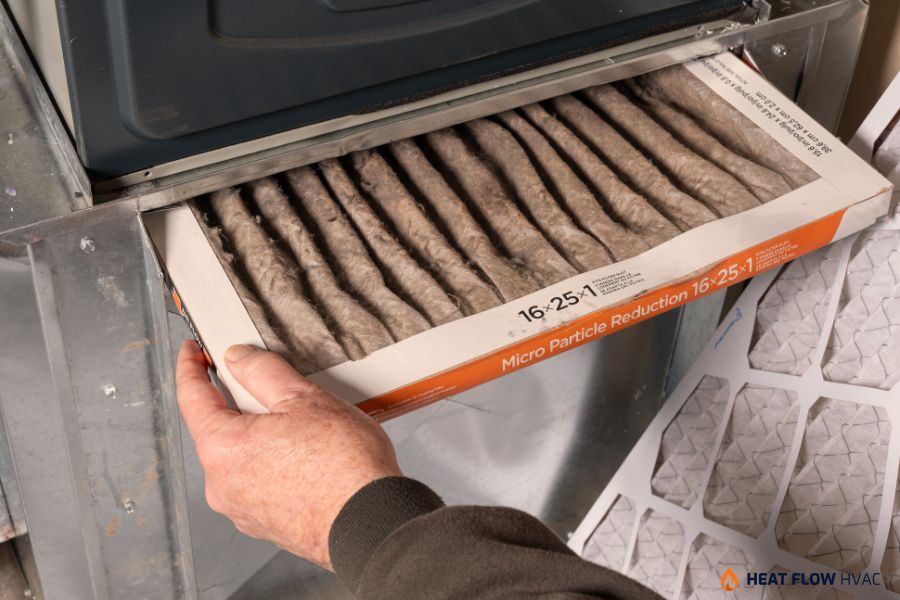
4. Clear Your External Vents
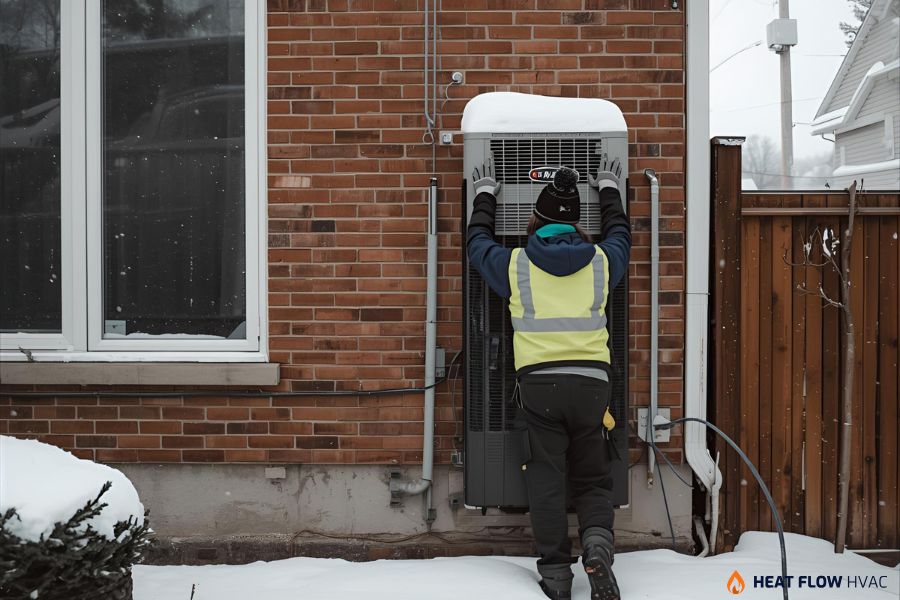
High-efficiency furnaces have white PVC pipes sticking out of the side of your home for intake and exhaust. After a heavy snowfall or a drifting wind, these pipes can get buried. If the furnace cannot exhaust gases safely, it will shut down instantly. Go outside and gently clear away any snow or ice blocking these pipes.
| Symptom | Likely Culprit | DIY Fix to Try |
|---|---|---|
| Screen is blank | Dead batteries or power loss | Replace batteries; check breaker panel. |
| Blowing cold air only | Thermostat setting or Limit Switch | Check thermostat is on “Auto” not “On”; replace dirty filter. |
| Furnace runs for 2 mins then stops | Overheating (Short Cycling) | Replace air filter immediately. Open all room vents. |
| No sound at all | No power | Check the emergency switch on the side of the furnace/wall. |
Mechanical Failures: When Low Furnace Temperature Needs a Pro
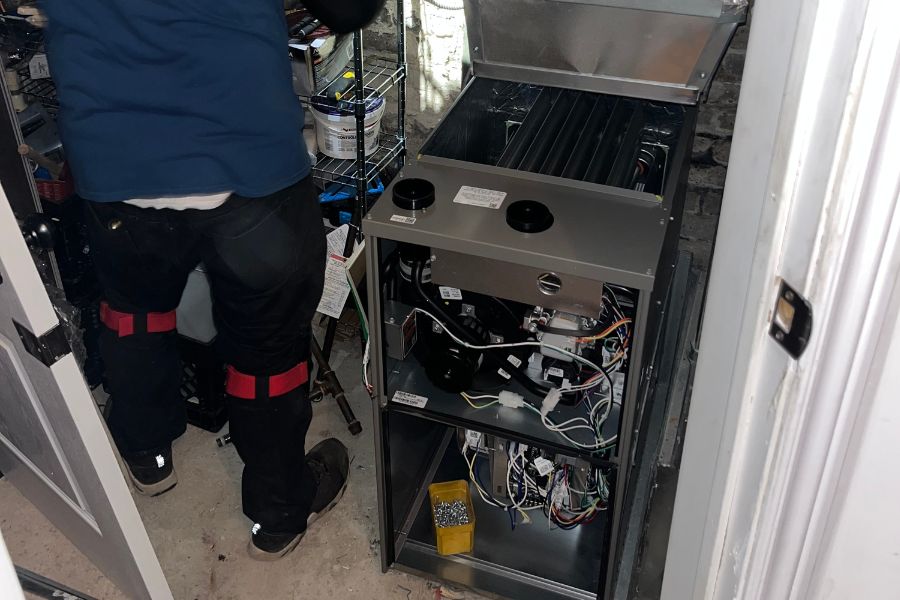
If you have gone through the checklist above and your furnace is still not working, you are likely dealing with a mechanical failure. Modern furnaces are complex machines with numerous safety sensors designed to protect you. When these sensors detect a problem, they shut the gas off to prevent explosions or carbon monoxide leaks. Here are the most common internal failures we fix during cold snaps.
The Flame Sensor Issue
One of the most common service requests we receive is this one. A tiny metal rod that is positioned in the burner’s fire path serves as the flame sensor. Its function is to verify the existence of a flame. This rod accumulates carbon, soot, or oxidation over time. It cannot “feel” the flame if it becomes too dirty.
What occurs: As the burners light, you will hear the furnace click and whoosh. The system will abruptly shut off after the fire lasts for four to seven seconds. The computer cuts the gas for safety because it believes there isn’t a fire, even though there is. This needs to be replaced or cleaned by professionals.
Igniter Failure
Older furnaces used a standing pilot light, but modern units use an electronic Hot Surface Igniter. Think of it like the filament in a lightbulb. It heats up to a glowing orange to ignite the gas. Eventually, these igniters crack or burn out. If you hear the fan running and hear gas clicking but never see that orange glow, your igniter has likely failed and needs to be replaced with a specific manufacturer part.
Frozen Condensate Lines
High-efficiency furnaces create water (condensate) as a byproduct of heating. This water drains away via a plastic tube. In extremely cold weather, if that tube runs through an uninsulated area or drains outdoors, it can freeze solid. When the drain is blocked by ice, water backs up into the furnace. A safety switch detects the water and shuts the system down to prevent electrical damage. If you hear gurgling noises coming from your unit, this is a strong possibility.
| Strange Noise | What It Usually Means | Urgency Level |
|---|---|---|
| Loud Bang or Boom on startup | Delayed ignition (gas buildup) | High – Call for service immediately. |
| High-pitched Squealing | Blower motor belt or bearing issue | Medium – Needs repair soon to avoid burnout. |
| Scraping or Metal-on-Metal | Blower wheel is broken or loose | High – Turn off furnace to prevent damage. |
| Rapid Clicking | Ignition system or relay failure | Medium – System won’t heat until fixed. |
Safety First: Understanding the “Red Tag”
We believe that it’s important to be open and honest with our clients throughout the GTA. A “furnace not working” situation can occasionally be a blessing in disguise since it warns us of a potentially dangerous situation. The TSSA regulations (Technical Standards and Safety Authority) mandate that we issue a “Red Tag” if our technician finds a safety hazard, like a cracked heat exchanger or a gas leak.
- Type A Tag: This denotes an imminent threat (such as a carbon monoxide leak). We have to turn off the appliance’s gas right away. Until it is fixed or replaced, it cannot be used.
- Type B Tag: This denotes a safety infraction that needs to be corrected within a certain amount of time (typically 30 days) before the gas shutdown, but is not an immediate threat.
Prevention is Cheaper Than Repair
The best way to avoid a shivering night is to recognize these issues before the temperature drops. With periodic inspections, we can clear the drainage lines before they freeze, test the igniter’s resistance, and clean the flame sensor. Here is a quick rundown of what an expert tune-up usually consists of to keep you safe:
- Checking the heat exchanger for cracks and corrosion.
- Clean and adjust the burner assembly for accurate firing.
- Lubricating all of the moving parts of the blower motor.
- Check the manifold and gas pressure to guarantee effective fuel use.
- Testing all safety controls and limit switches.
Living in Ontario means our heating systems aren’t luxuries; they are survival tools. Whether you are in a historic home in Etobicoke or a new build in King City, the damp cold finds a way in.
At Heat Flow HVAC, we focus on getting to the root cause. We don’t just swap parts, we look at why they failed. Is your furnace sized right? Is your high-efficiency unit draining properly? We carry the common parts for major brands like Lennox, Carrier, and Goodman in our trucks to ensure we can fix them on the first visit whenever possible.
We also help you navigate the rebates. Did you know upgrading a failing furnace to a heat pump system can land you up to $7,500 in rebates? If your furnace is old and struggling with the furnace temperature demands of a Canadian winter, it might be time to stop repairing and start upgrading
Need Help When Your Furnace Is Not Working in the GTA?
You don’t have time to wait when your furnace is not working because of a drop in temperature. To complete the fix on the first visit, you need a team that is familiar with the local climate and has the equipment they need. At Heat Flow HVAC, we take immense pride in our open communication, clear pricing, and high-quality work.
We are here to restore your comfort, whether you are dealing with a straightforward sensor error or require a complicated repair. Refrain from letting the cold prevail.